The best Articulate 360 alternatives to explore in 2027
 29 minutes







I’ve worked with a variety of eLearning authoring tools over the years, starting with Articulate 360. It’s powerful, but not perfect for everyone. That’s why I tested popular alternatives to find easier course creation, smoother workflows, and better value. Here’s my take on the best ones to explore. Please note that pricing and product information were checked in October 2026.
Key takeaways
A software simulation and a short policy refresher call for different tools. Adobe Captivate can record a task for learners to practice. Easygenerator gives policy experts a browser editor where they can write or update the lesson themselves. Both are among the seven Articulate 360 alternatives compared here.
What is Articulate 360?
Articulate 360 is a suite of authoring tools for creating interactive eLearning content. It includes Storyline for advanced slide-based courses, Rise for quick responsive content, and other supporting apps.
Main concerns about using Articulate 360
While powerful, it’s not always the best fit for every team because of cost, complexity, or specific feature needs.
Comprehensive but costly
Articulate 360 offers a powerful suite of tools, and many users find great value in the package. However, some note that the annual subscription can be hard to justify for individuals or small teams, especially without a monthly plan or more flexible pricing options.
Team editing in Rise 360 and Storyline 360
In Rise 360, edits show up in the shared course as you work. With an Articulate 360 Teams plan, two authors can make changes at the same time — as long as they’re in different lessons. Storyline 360 authors work in desktop project files. For feedback on either draft, send reviewers a Review 360 link.
Responsiveness varies by tool
Rise 360 is well-suited for mobile-friendly, responsive content. Storyline, on the other hand, uses fixed layouts that don’t always adapt well to different screen sizes or modern display resolutions.
Advanced logic requires technical know-how
Using triggers, variables, and interactive elements in Storyline opens up creative possibilities, but it also comes with a learning curve. Some users feel that the more technical features could use clearer guidance or support.
The top Articulate 360 alternatives compared
Here is a summary of the best Articulate alternatives featured in this article. Click on any that seem relevant, or keep reading for a complete overview of each tool.
| Tool | Best for | Key Differences from Articulate 360 | Pricing |
| Tool | Best for | Key Differences from Articulate 360 | Pricing |
| 1. iSpring Suite | Course developers looking for an affordable eLearning solution with rich features, intuitive UI, and prompt tech support. | Fully PowerPoint-based authoring, easy to start; offline authoring tool; works in restricted networks; strong support and faster content updates. | From $970 per user/year. Discounts for educators and nonprofits |
| 2. Adobe Captivate | Experienced course developers focused on interactive courses and software simulations. | Steeper learning curve but greater flexibility for software simulations and responsive design; the subscription also includes Captivate Classic for 360°/VR. | Upon request |
| 3. Easygenerator | Course creators and L&D teams that prioritize quick knowledge sharing and typically don’t create advanced training materials. | Simpler UI, faster to use, supports branching scenarios, but offers less granular logic than Storyline’s variables, triggers, and states. | From $125 per user/month |
| 4. Create (formerly Elucidat) | Extensive L&D teams that manage large-scale training projects. | Designed for large teams with centralized asset control, real-time collaboration, and brand governance. | Upon request |
| 5. dominKnow | Enterprise-level companies with extensive content development needs | All-in-one LCMS with built-in responsive and fixed layout modes, reusable assets, and software sims. | Upon request |
| 6. Lectora | Experienced instructional designers building projects with complex logic and accessible content. | Offers full scripting and accessibility control; higher learning curve but more flexibility. | $1,549/year |
| 7. GomoLearning | Teams looking for cloud-based, mobile-first authoring with consistent output across devices. | 100% browser-based with built-in delivery and analytics; lacks depth of customization in interactions. | Upon request |
An overview of the top Articulate 360 / Articulate Storyline competitors
Articulate alternatives
There’s no one-size-fits-all solution when it comes to authoring tools — and that’s exactly what I kept in mind while testing each of these Articulate 360 alternatives.
Pricing: from $970 per user/year for iSpring Suite; $1,290 per user/year for iSpring Suite AI
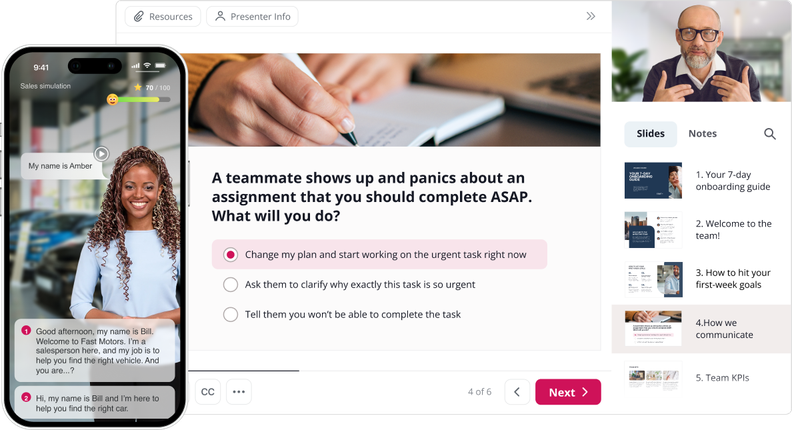
I’ve used iSpring Suite AI on dozens of projects, and honestly, it’s one of the most practical tools I’ve worked with. The PowerPoint-based setup might seem too simple at first, but that’s exactly what makes it powerful: it removes the barrier to entry. It’s packed with lots of features. You can build branching scenarios, create up to 14 types of assessments, and record videos. Courses can be published to SCORM 1.2/2004, xAPI, cmi5, AICC, HTML5, and other supported formats. You can track learner progress and course completion rates through a compatible LMS.
Another major plus is the built-in Content Library that’s packed with templates, characters, and backgrounds — it speeds up course building and keeps the design consistent. I also found the support system solid: the AI Course Creator feature helps you with content creation and editing, while 24/7 human support is ready to resolve issues fast, even on weekends.
I don’t deny that some features take a bit of clicking around to find — especially in the quiz builder. There are lots of settings, and not everything is obvious at first glance. Also, projects with a great deal of media can feel heavy on slower machines, and the PowerPoint-centric setup may not appeal to everyone.
Key features
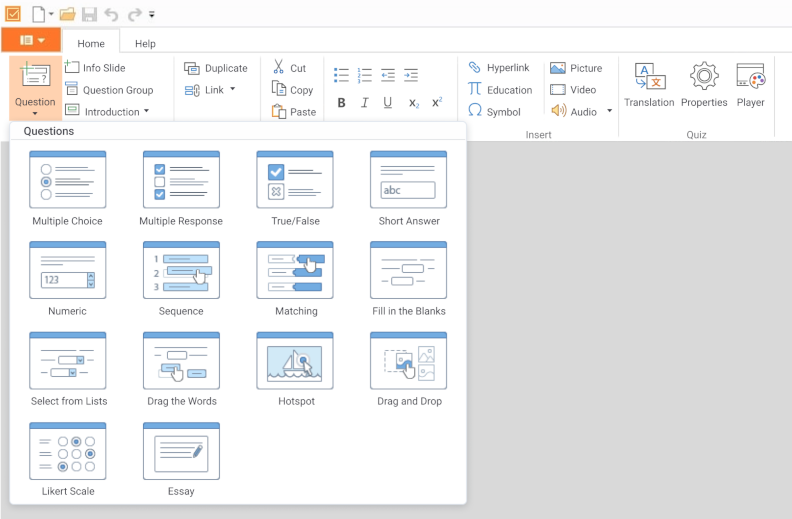
After using iSpring Suite for a while, here are the features I found most useful in day-to-day course development:
- PowerPoint to SCORM conversion. I could take existing slide decks and turn them into LMS-ready online courses in just a few steps. Since everything happens inside PowerPoint, I didn’t have to relearn a new interface or rework the structure.
- Authoring tool for restricted networks. It worked smoothly in secure environments with limited internet access. I installed and activated the software offline, then published courses directly to the LMS without needing to connect to external servers. If you’re looking for the best authoring tools for restricted networks, iSpring Suite is a top choice.
- Offline authoring tool. iSpring Suite works entirely within PowerPoint, so I could build courses without an internet connection. That was perfect for those times when Wi-Fi was unreliable or when I needed to focus without distractions.
- Content Library. It’s like having a full design studio at your fingertips, with over 130,000 assets, including templates, character images, and 3D backgrounds. It’s easily one of the most extensive libraries I’ve worked with. I just picked what worked and moved on, instead of designing visuals from scratch.
- Character Builder. I tried creating custom characters for specific training scenarios. The drag-and-drop interface was simple to use, and it helped make the course feel more personalized and relevant for learners.
- iSpring AI. The AI assistant helped me generate quiz questions, reword content, and adjust formatting. Since it’s built into the tool, I could make quick edits without interrupting my flow.
- Real-time collaboration. To share my drafts with teammates, I just sent them a link, and they could leave comments directly in the draft, which I found very straightforward.
Pricing
iSpring offers flexible pricing options to match different needs. All plans are billed annually:
- iSpring Suite — $970 per author/year. This covers all essential authoring features for course creation but doesn’t include online collaboration, iSpring AI, text-to-speech, or access to Content Library.
- iSpring Suite AI — $1,290 per author/year. This plan includes full functionality, including collaboration, AI tools, text-to-speech, and Content Library.
Special pricing is available for educators and freelancers on both the Suite and Suite AI plans.
Before purchasing, you can try iSpring Suite free for 14 days and explore all the features to start creating professional online courses right away.
How it’s different from Articulate 360
While both Articulate 360 and iSpring Suite are powerful course-creation tools, they take very different approaches.
| iSpring Suite | Articulate 360 |
| iSpring Suite | Articulate 360 |
| Has a minimal learning curve; you can start building interactive courses almost immediately. | Storyline has a unique interface and has a significant learning curve, especially for beginners. |
| Fully integrated with PowerPoint, making it extremely intuitive for users familiar with it. | Offers more control, but new users often need training to use Storyline effectively. |
| With a license key and an activation code from iSpring Support, you can set up Suite on an offline PC. The course stays in PowerPoint while you edit it, and you can export it to the local drive. | Teams can have Articulate disable cloud services such as Rise 360. Storyline 360 still needs an online sign-in at setup and again after 99 days of offline editing. |
| Flexible licensing. Offers exclusive pricing for educators and nonprofit organizations. | Subscription-only model. Articulate 360 AI is sold as an annual subscription. |
| Create engaging courses with quizzes, video lectures, simulations, and interactions in a single app. | Rise for fast, simple courses; Storyline for advanced interactivity — switching may be required. |
| Built-in collaboration via iSpring Cloud AI lets teams co-edit and approve content directly. | Rise 360 authors on a Teams plan can work in the same course at once — one person per lesson. Stakeholders can comment on either a Rise or Storyline draft in Review 360. |
| 24/7 support via chat, email, and phone — praised for fast, human responses. | Email and chat support are available; 24/7 Tier 1 coverage, and live chat for Teams subscriptions. |

Pricing: custom
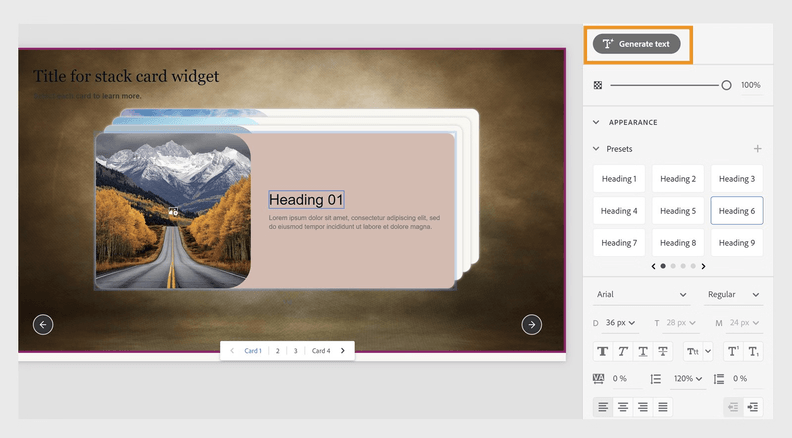
After iSpring Suite, I tried Adobe Captivate, expecting a mature, powerful tool — and in many ways, it delivered. It’s strong in interactive training with simulations, scenario-based learning, and visual effects, and integrates well with other Adobe tools.
However, Captivate isn’t something you just open and start working with. The interface feels outdated and cluttered, and even basic tasks take more clicks than you’d expect. Adding video and interactivity can slow things down, and I experienced a few crashes while editing. Also, it’s desktop-only with limited collaboration, which slowed feedback.
Captivate is a tool for pros — or those ready to become one. It has a lot to offer but comes with a steep learning curve and little guidance along the way.
Key features
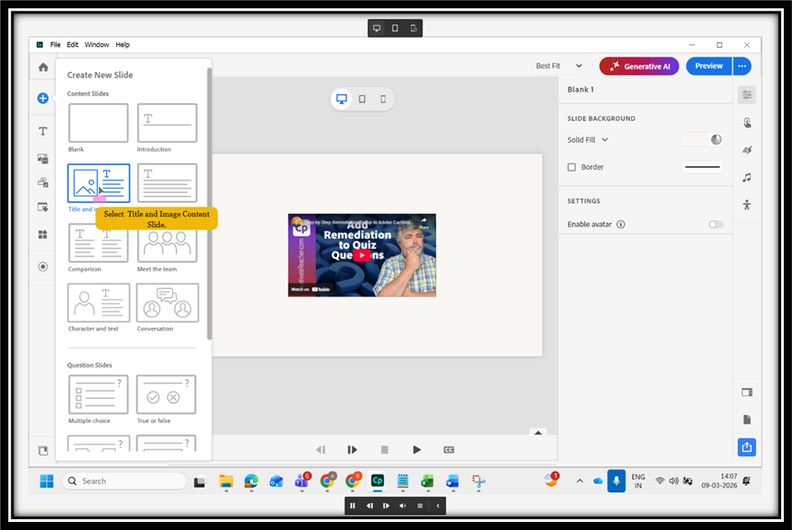
After spending some time with Adobe Captivate, here’s what I found especially helpful:
- Asset library. The built-in collection had pretty much everything I needed, from images and icons to ready-made interactions and audio clips. It was nice not having to look elsewhere for visuals, and it helped keep the course consistent throughout.
- Quick start projects. I picked one of the templates to speed things up and customized the content, layout, and quizzes right away. It gave me a solid structure to build on, especially when I didn’t want to start from a blank slide.
- Software simulations. One area where Captivate really delivered was screen recording. I tested the demo, training, and assessment modes and used them to walk learners through software workflows. It’s especially useful if your course is focused on tools or systems.
- Online review. Once I had a draft, sharing it with others for feedback was simple. I could just send a link, and all comments stayed in one place. That made the review loop feel way more manageable.
Pricing
Adobe Captivate offers flexible subscription options:
- Single-user plan — custom pricing.
- Multiseat licensing — for teams and small businesses looking to manage multiple users under one account — custom pricing.
How it’s different from Articulate 360
After spending some time with both tools, I realized they’re built with very different users in mind.
| Adobe Captivate | Articulate 360 |
| Adobe Captivate | Articulate 360 |
| Packed with advanced features like interactive video and software simulations — great for experienced course creators. | Includes Rise for quick courses and Storyline for advanced interactivity — switching between tools may be needed. |
| The interface feels outdated, and basic tasks take time to figure out. | Storyline takes time to master, but Rise is beginner-friendly. |
| Desktop-based, single-author workflow. Limited real-time collaboration. | Storyline 360 is a desktop editor, too. With a Teams plan, Rise 360 authors can divide up a course by lesson and work on it at the same time. |
| Captivate supports responsive courses and software simulations. The subscription also includes Captivate Classic for 360° and VR projects. | Interactive templates and scenario-building are available, but no native VR support. |
Pricing: from $125 per user/month (billed annually)
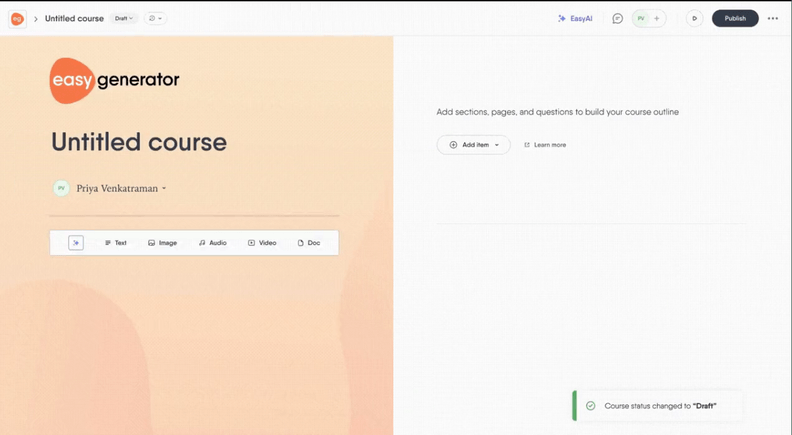
After trying Adobe, I gave Easygenerator a shot — and was pleasantly surprised. It’s a lightweight, cloud-based tool designed for non-tech-savvy people, requiring fewer technical steps compared to Articulate Storyline or Adobe Captivate. If you’re new to course design or need something fast and functional to create and sell online courses, it is a compelling option.
It uses a block-based editor with a built-in AI engine that helps generate basic structure, text, and even visuals. You can build a draft in minutes and polish it from there. Easygenerator supports branching scenarios through its Scenario feature, although it offers less granular interaction logic than Storyline’s variables, triggers, and states.
Key features
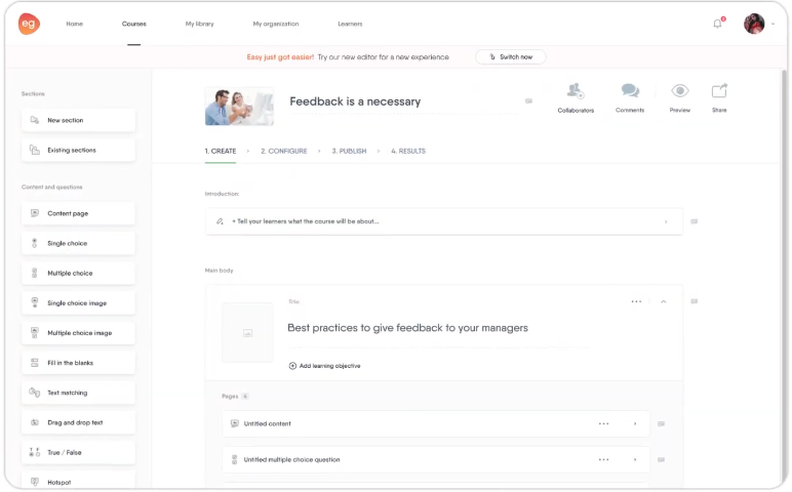
As I worked through building a course with Easygenerator, these features came in handy:
- EasyAI. The AI features helped with structuring content and rephrasing tricky parts. I didn’t rely on it for everything, but it was handy when I got stuck or wanted to clean something up quickly.
- Online collaboration. I invited a teammate to co-edit a course, and it was pretty seamless. I could make updates, leave comments, and manage access with a password, which was helpful when sharing early drafts.
- Text-to-speech. I tried converting a few sections into voiceovers using the built-in voices. The result was good enough for internal training, and it definitely saved time compared to recording the voiceovers myself.
- Video-based content. Recording screen demos and webcam intros in the same place made things a lot easier. I liked that I could fine-tune the video and add subtitles without switching to another tool.
- Media library. I browsed through their asset collection for some images and layouts. It wasn’t overwhelming, and I found enough useful stuff to make the course look more polished without extra effort.
Pricing
Easygenerator offers several plans, depending on your team size and content needs:
- Pro — the equivalent of $125 per month ($1,499, billed annually) for individual authors. Includes course templates, interactive elements, SCORM export, and shareable course links. Allows up to 10 courses and 100 learners.
- Team — the equivalent of $625 per month ($7,495, billed annually) for growing teams. Supports 5+ authors, unlimited online courses and learners, real-time collaboration, certificates, full tracking, question analytics, and a dedicated success manager.
- Enterprise — custom pricing for large-scale teams with unlimited authors, full customization, multilingual support, advanced user management, and on-demand training options.
How it’s different from Articulate 360
If you’re choosing between Easygenerator and Articulate 360, it mostly comes down to priorities: speed and simplicity versus depth and control. Here’s how they compare:
| Easygenerator | Articulate 360 |
| Easygenerator | Articulate 360 |
| Extremely intuitive. You can start building content with zero training. | More polished than most tools, but Storyline has a steeper learning curve. |
| Basic templates and quizzes — great for knowledge checks, but limited layout variety. | Full suite: complex branching, drag-and-drop, custom states, variables, and more. |
| Easygenerator emphasizes onboarding/success management. | Articulate also provides direct vendor support. |
| Built-in real-time collaboration — great for teamwork with multiple authors. | Several authors on a Teams plan can edit a shared Rise 360 course at once. Rise locks each lesson while someone is editing it. |
Pricing: upon request
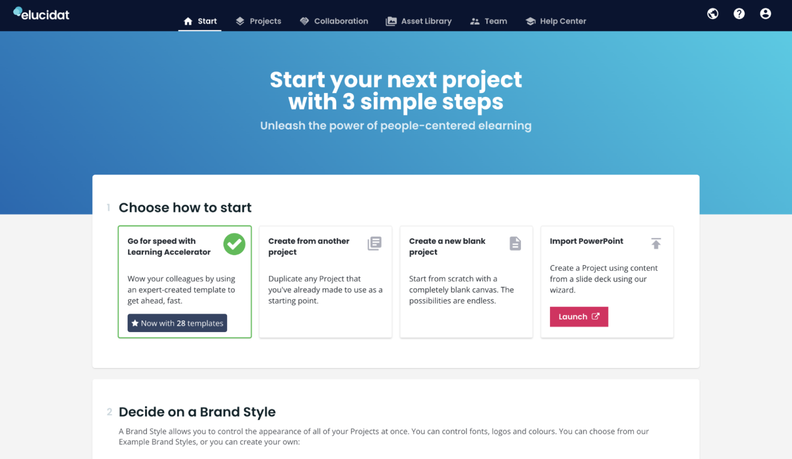
Create, formerly Elucidat, feels like a corporate training design studio — clean, structured, and built for large teams creating scalable, on-brand content. It uses a web-style layout editor that makes courses automatically responsive across devices, which is ideal for organizations that are rolling out content in bulk.
What stood out right away was how Create handles layouts — it’s more like piecing together a web page. That shift took me a minute to get used to, but once I did, I started appreciating the flexibility. I could keep everything responsive and polished without worrying about how it would look on mobile devices. For orgs rolling out content in bulk, this thing is built for that.
If a course starts in Create and later needs branching, a team with access to Author can copy the project there. Author’s Rules determine which pages each learner sees. Storyline 360 lets you get more specific with triggers and variables, down to when a button appears on a slide.
Key features
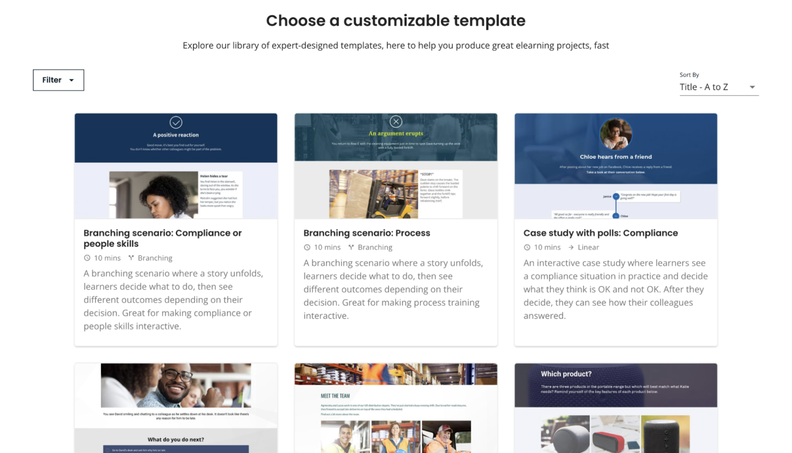
After testing Create on a few different projects, here are the features that stood out for me:
- Collaborative authoring. I could assign roles, manage access levels, and collect feedback directly in the project. The review process felt organized, even when several people were involved.
- Brand control. I liked that I could set up branded templates once and reuse them across all courses. That helped keep visuals consistent and save time when making updates across multiple modules.
- Localization support. I tried exporting a course in several languages, and the platform handled it in one SCORM package. You can also request translation from the built-in AI assistant, which might be helpful if you’re producing multilingual content at scale.
- AI authoring. The tool can help draft intros, summaries, and quiz content. It’s not turned on by default, but once enabled, it’s a useful way to get started or rework rough ideas faster.
- Accessibility features. I explored its accessibility settings, like adding alt text and adjusting color contrast. From my experience, I can say that it can be useful when your audience includes learners with diverse needs.
Pricing
Create’s pricing is available upon request from Confirm and varies based on an organization’s requirements.
How it’s different from Articulate 360
Let’s look at how Create and Articulate 360 compare when it comes to collaboration, customization, and delivery:
| Create | Articulate 360 |
| Create | Articulate 360 |
| Strong brand control features, global style guides, customizable templates, and multi-brand support. | Limited in Rise; more control in Storyline, but requires manual setup. |
| Auto-Translate creates language versions from one source course. Use the glossary to set how terms, such as product names, should appear. | AI translation covers 80+ languages, and you can send each version to Review 360 for a check before publishing. AI uses credits, which Articulate sells separately on current Articulate 360 AI plans. Teams on older course-based Localization plans can use their existing credits. |
| Create can show feedback on quiz answers. For different course paths based on those answers, use Rules in Author. | Storyline 360 can save an answer in a variable and use a trigger to change what appears on a later slide. |
| Built for non-technical users. Very intuitive, especially with templates and guided design. | Also user-friendly, but Rise is simpler than Storyline, which has a steeper learning curve. |
Pricing: custom
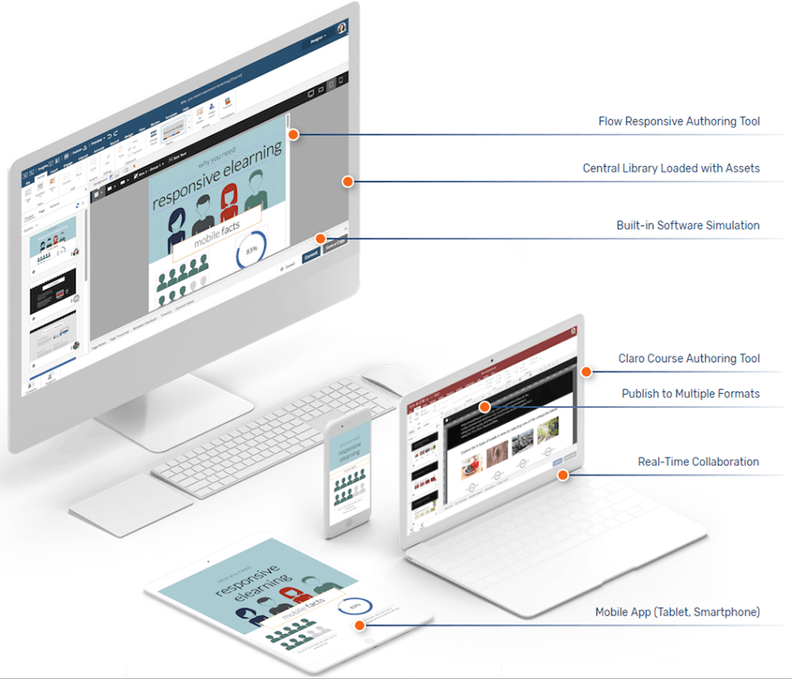
dominKnow feels like an enterprise-level content factory — built for teams working at scale. It isn’t exactly your typical authoring tool, but rather a full Learning Content Management System (LCMS). That means you can not only build courses but also manage, reuse, and update content across projects, teams, and languages in a single centralized platform. It offers two authoring modes: Claro, for fixed layouts, and Flow, for responsive design. Plus, the Capture tool makes creating software simulations quick and seamless.
One of dominKnow’s biggest strengths is content management. You can set up a course once and then adjust it for different audiences, languages, or devices without starting over. Things like content variables, conditional blocks, and responsive templates make it easier to scale. I can see how that would be useful for larger projects or in teams that are working across regions.
It’s not lightweight, however. The interface takes time to learn, and the number of options can get overwhelming fast. Some things just feel unnecessarily complex, like managing layout containers or formatting assessments. Overall, the platform itself can be sluggish when you’re deep into a project.
Key features
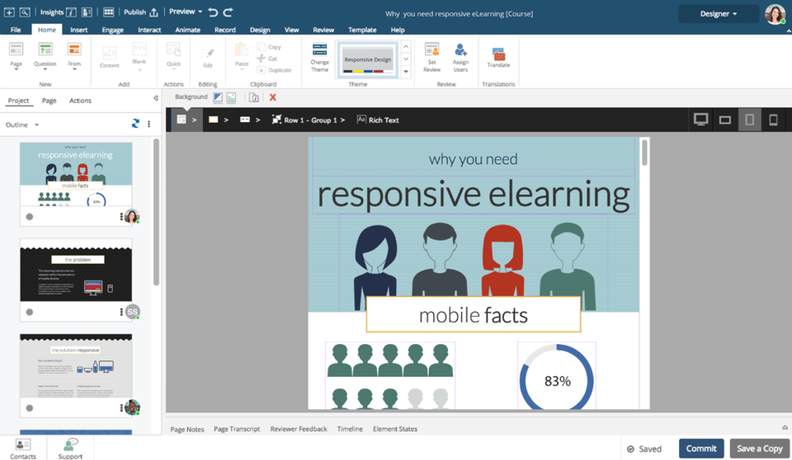
Once I got into dominKnow, a few features clearly made things smoother or saved time. Here’s what I would highlight:
- Software simulations. I recorded a couple of system processes using the built-in Capture tool. It automatically turned them into step-by-step simulations, which can work well for software training courses.
- Collaborative workflow. It was easy to work on a project with others, even asynchronously. I could invite co-authors, manage different versions, and send out review links.
- Responsive design. The Flow editor made it possible to build content that looked good on phones and tablets without extra tweaks. I didn’t need to resize or rearrange elements manually because the layout adapted automatically.
- Flexible publishing. Once the course was ready, I could export it in pretty much any format — SCORM, xAPI, HTML5 — to monitor learner progress across devices and courses.
- Localization features. I tested building a multi-language version of a course and liked that it kept everything in one place. The interface elements came pre-translated, and there was built-in support for working with translation files.
Pricing
dominKnow offers flexible pricing plans upon request.
- Business — Best for small teams that need powerful tools for responsive design, software simulations, content reuse, accessibility support, and cloud collaboration. Includes a starter package with Convey for dynamic content delivery.
- Business PLUS — Designed for growing teams. Adds more storage, private single-tenant hosting, custom URLs, multi-domain management, optional SSO, an advanced Convey package, and a dedicated account manager.
- Enterprise — Tailored for large organizations with advanced security and deployment needs. Includes on-premises or private VPS hosting, customizable security settings, and full control over release schedules and environments.
You can also request a free trial — I tested it myself and didn’t feel limited.
How it’s different from Articulate 360
Both are popular authoring platforms, but they serve different needs. Here’s what stands out about them:
| dominKnow | Articulate 360 |
| dominKnow | Articulate 360 |
| Better for enterprises, complex workflows, and teams working at scale. | Great for freelancers, small teams, and rapid development. |
| Dedicated Capture tool for interactive software sims — built-in, easy to update. | Basic screen recording in Storyline, limited interactivity. |
| Strong LCMS capabilities — reusable assets, global updates, shared libraries. | No central LCMS — assets live in projects. |
| One platform with multiple modes (Flow for responsive, Claro for fixed layout, Capture for software sims). | Two main tools — Rise (responsive, fast) and Storyline (powerful, but Windows-only). |
Pricing: from $1,549/year
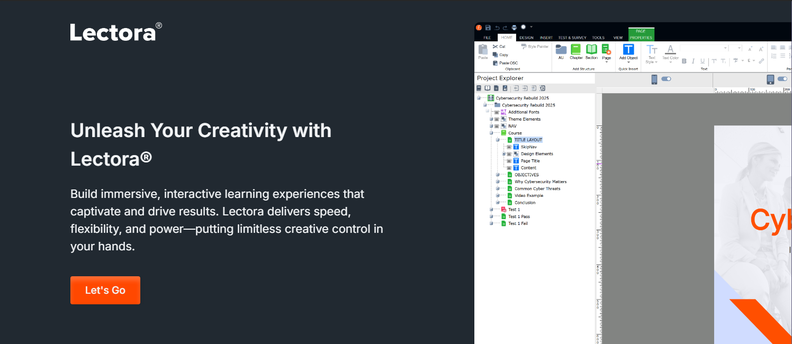
Lectora has been around for decades, and it shows. It’s a mature tool packed with depth, built for those who want full control and flexibility. You can work offline in the desktop app or collaborate online, but the interface feels dated, cluttered, and overwhelming at first. Still, once you get past that, you can build a course from a blank project. If you start with an AI draft, expect to spend some time editing it.
Accessibility is one of Lectora’s strengths, making it easier to create WCAG- and Section 508-compliant courses. It also comes with extras like ReviewLink for feedback and Camtasia/Snagit integrations.
Overall, while Lectora offers deep functionality, the UI and workflow feel heavy and outdated, slowing down even experienced designers.
Key features
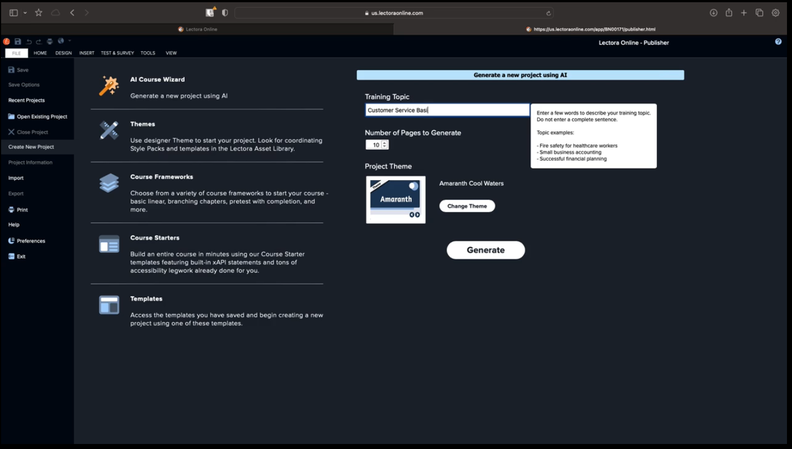
Lectora is not as sleek or beginner-friendly as some other options, but if you like full control and aren’t afraid of a learning curve, there’s a lot to explore. Here are a few features that stood out:
- Accessibility tools. I tried setting up a course to meet WCAG requirements, and Lectora helped structure it properly. I could define reading order, add alt text, and test how the content worked with screen readers — useful for building compliant content.
- Advanced interactions. I tried to make an interactive training course using a few branching scenarios with custom variables and actions. It took a bit of setup but gave me a lot of freedom to personalize learning paths and build more adaptive experiences.
- Responsive design. I had to adjust views manually, but that also meant I could optimize layout and readability for each breakpoint, not just rely on auto-scaling.
- JavaScript and HTML integration. I added a custom script and embedded an HTML widget right into the course. That gave me options beyond what the UI offers, which can be handy when you need to build something more complex or that involves hard tech.
- Version control. While working on a multi-page course, I used the inheritance feature to manage recurring elements like menus and headers. It saved me some time and made updates easier since changes were applied across all relevant pages automatically.
Pricing
Lectora is available through two main plans, both billed annually:
- Studio Gold Suite — starting at $1,549/year. Includes Lectora, MicroBuilder, and AssetLibrary.
- The Learning Creation Studio — starting at $10,547/year. Provides a bundle of 9+ learning tools to design more engaging and immersive training experiences.
For exact pricing and custom options, you’ll need to contact the vendor.
How it’s different from Articulate 360
Here’s how they stack up after hands-on use:
| Lectora | Articulate 360 |
| Lectora | Articulate 360 |
| Supports scripting (JavaScript, variables) and is ideal for custom logic and non-linear structures. | Rise for quick, responsive modules and Storyline for advanced interactions. |
| Has a steeper learning curve because of its technical flexibility, but it’s straightforward for experienced developers. | Beginner-friendly, especially Rise 360; Storyline mimics PowerPoint’s logic, which reduces the learning curve. |
| Includes ReviewLink and supports desktop + online workflows. While not built for real-time collaboration, its desktop version integrates well with team-based publishing processes. | Teams authors can divide the editing by lesson in Rise 360 and work in the same course simultaneously. Reviewers get their own link to the draft in Review 360. |
| Supports SCORM, xAPI, AICC, cmi5, and has strong integration with Camtasia and other ELB tools. | Integrates with LMSs via SCORM/xAPI and offers limited third-party integrations (e.g., Slack, MS Teams). |
Pricing: upon request
Gomo mostly delivered what I expected for multi-device content: a clean interface, an intuitive drag-and-drop builder, and a built-in delivery system. It felt more like designing a website than a slideshow, which made it fast and easy to publish courses online, share links, or create LMS packages without fighting the design.
That said, some components (like hotspots) were tricky to configure, and a few layouts didn’t behave as expected. Flexibility is limited — the template structure can box you in.
Pricing can also be a hurdle for small teams, with no low-cost plan and extra fees for hosting. Still, for corporate teams needing quick, responsive courses, Gomo is a solid option.
Key features
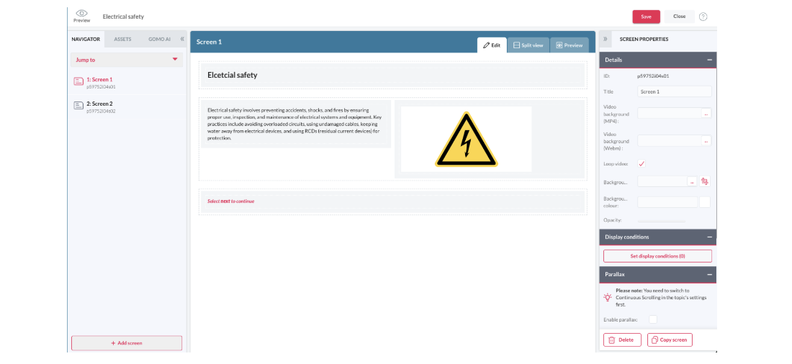
If your focus is quick, consistent content across devices, Gomo gets the job done. Here’s what I liked:
- Responsive by default. I built a test course to see how Gomo handles multi-device layouts. Without doing anything extra, it adjusted to mobile, tablet, and desktop screens. That’s helpful if you don’t want to deal with separate views or manual layout tweaking.
- Cloud-based collaboration. Since everything runs in a browser, it was easy to co-author with my teammates. I could access the same project, share media, and review changes without sending files back and forth.
- Drag-and-drop editor. I wanted to prototype a course fast, without getting stuck on technical stuff. The drag-and-drop editor helped me put together clean layouts and add media quickly. It doesn’t offer full creative freedom, but it’s efficient when speed matters.
- Multi-device preview. I used the built-in preview to check how screens looked on different devices. This can certainly be useful to catch small layout issues early and make sure the course remains readable across formats.
Pricing
Pricing is available upon request and depends on the number of authors and amount of cloud storage needed:
- Small, for solo authors creating and publishing online courses for an LMS, includes 1 author login, 1 GB of storage, unlimited courses, and access to support and training resources.
- Medium is for teams of up to 4 authors collaborating on course creation. It includes 4 author logins, 4GB of storage, unlimited courses, team collaboration tools, and priority support options.
- Enterprise is geared for large teams that need flexible licensing, expanded storage, priority technical support, and a dedicated account manager.
How It’s different from Articulate 360
After using both authoring tools, here are the takeaways:
| Gomo Learning | Articulate 360 |
| Gomo Learning | Articulate 360 |
| Mobile-first learning that offers responsive output by default. Courses look clean and consistent across screens. | Only offers true responsiveness in Rise; Storyline uses fixed layouts that adapt but aren’t fully mobile-friendly. |
| 100% cloud-based, which makes sharing, editing, and reviewing content seamless across teams. | Several authors can work in a shared Rise 360 course from their browsers on a Teams plan. Each edits a separate lesson. Storyline 360 uses desktop project files. |
| Provides quiz features and randomized questions but lacks the depth of customization found in Storyline. | Includes advanced quiz tools with SCORM/xAPI support, branching, question banks, and feedback layers. |
| Published Gomo courses adjust to the learner’s screen. Authors can add alt text and choose interactions that work with a keyboard and screen reader. | Supports screen readers and alt text but requires extra effort in Storyline to meet full accessibility standards. |
Final thoughts
Whether you need something intuitive for quick builds or a powerhouse for advanced interactive training, there’s a strong alternative to Articulate 360 for every need. If you’re looking for a practical, easy-to-master solution with strong support, iSpring Suite is worth a closer look. Book a live demo, and an eLearning expert will show you how it can fit your course creation workflow.
Create online courses and assessments in record time.





The 60+ Best Instructional Design Software and Tools for 2026

The 25 Best Online Learning Collaboration Tools

The 15 Best Learning and Development (L&D) Tools
Adobe Captivate vs. Camtasia vs. iSpring Suite
