
How To Create A Leadership Development Program In 6 Steps
 14 minutes



Promoting a strong employee into management solves one problem and often creates another. The new manager suddenly has to provide feedback, handle conflict, set priorities for other people, and make decisions they never had to make as an individual contributor.
Learning how to create a leadership development program means preparing people for those responsibilities. In this guide, we’ll work through the entire process.
Key Takeaways
A leadership development program prepares current and future managers for the situations they will face at work. Start by defining the leadership skills your business needs, then identify participants and assess their current capabilities. Build the program around a mix of structured learning, real-world practice, feedback, coaching, and mentoring. Keep training relevant to each leadership level and involve managers and senior leaders in the process. To measure results, look beyond course completion to changes in behavior, team performance, retention, internal promotions, and readiness for future roles.
What is a leadership development program?
A leadership training program prepares employees for the challenges and responsibilities of leadership. Depending on the audience, that might mean helping a first-time manager run a one-on-one meeting or preparing an experienced department head to make decisions across several teams.
The content therefore changes with the job. An emerging leader may need practice giving feedback, delegating work, and transitioning from peer to manager. Someone further along may be working on strategic decision-making, leading other managers, or handling change across a business unit.
This is why leadership development is broader than a series of management courses. A program can include self-paced learning, live workshops, simulations, coaching, mentoring, assessments, and assignments completed as part of an employee’s actual work. A participant might learn a feedback model in an online course, use it during a difficult conversation that week, and discuss what happened with a coach afterward.
Companies can also build separate programs around different points in the leadership pipeline. Common examples include:
- Emerging leader programs for employees who may move into management
- New manager programs for those making the transition from individual contributor to team leader
- Management development programs for managers who already lead teams and need to strengthen specific capabilities
- Senior leadership programs for future leaders responsible for larger functions or business strategy
- Succession programs designed around positions the organization expects to need successors for
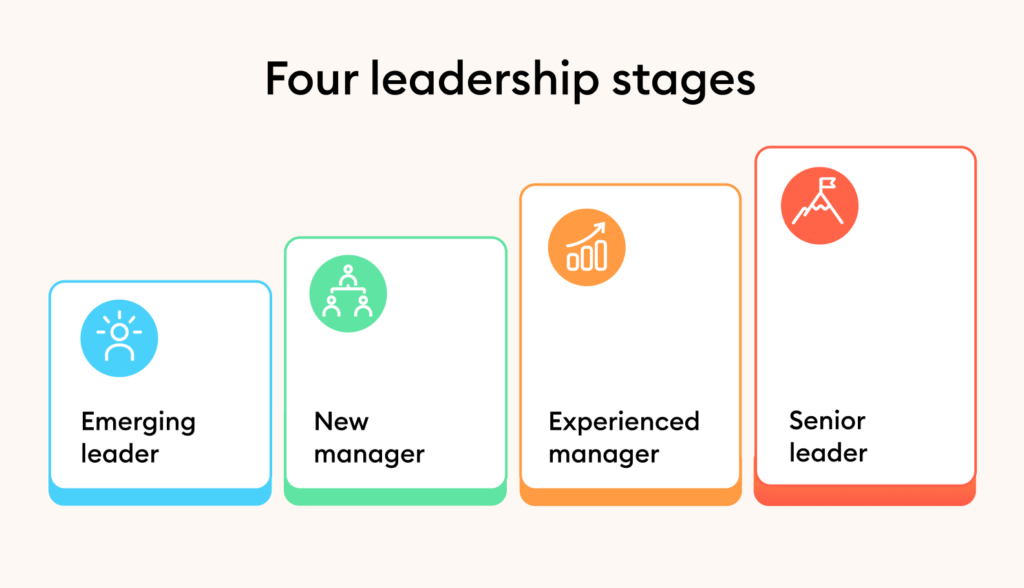
The distinction matters when the program is being designed. Putting a new supervisor and a senior director through the same leadership skills training may be convenient, but their jobs give them very different problems to solve.
Why organizations need leadership development
Many leadership gaps become visible only after someone has already moved into the role.
A technically strong employee gets promoted and struggles to delegate. A manager avoids difficult performance conversations until a minor problem becomes a serious one. Another knows their department well but has little experience making decisions that affect teams elsewhere in the company.
A structured leadership development plan gives the organization more control over that process. Instead of leaving each department to define what effective management looks like independently, the company can decide which behaviors it expects from new leaders and give participants opportunities to practice them.
It also gives succession planners something concrete to work with. Identifying a possible successor on an organization chart is relatively easy. Knowing whether that person can take on a larger role — and what they still need to learn before they do — requires much more information.
For L&D teams, the challenge is to keep the program connected to work. Leadership is difficult to develop through content consumption alone. Managers eventually have to make the call, run the meeting, resolve the disagreement, or tell someone that their current performance needs to change. An effective program gives them opportunities to practice these skills before they have to apply them in situations with real consequences.
Key steps to building a successful leadership development program
The design process should begin before anyone chooses courses.
1. Start with the business goals
Examine the skills and behaviors the organization expects from its potential leaders over the next few years. A company opening new locations may need managers who can build teams quickly and maintain consistent operating standards. A business with frequent internal promotions may need to help specialists transition into people management. Another organization may have enough managers today but few credible successors for senior positions.
Talk to senior leaders, HR business partners, and managers about where the business is heading and where leadership currently breaks down. From there, translate business needs into observable leadership competencies.
Companies can also use external expertise to translate a strategic plan into concrete leadership competencies and learning objectives.
2. Identify the right participants
Use several sources when choosing participants. Manager recommendations can reveal potential that isn’t obvious from performance data, while assessments, previous project work, employee career development goals, and succession discussions add context.
Once the audience is clear, divide participants into groups with similar development needs. Separating them makes it easier to give individuals situations they actually recognize from their work — and avoids asking an experienced department head to sit through training designed for someone preparing for their first one-on-one.
3. Assess current leadership capabilities
Start with competencies and leadership styles. If giving feedback is one of them, assess more than whether managers understand a feedback model. Leadership skills become much easier to assess when they are described through situations that managers encounter at work.
The assessment doesn’t need to become a lengthy exercise for every participant. A small company might use a manager interview and a short skills assessment. A larger organization preparing people for senior roles may need a more formal process with several sources of feedback.
Use the results to establish a baseline for each participant or group. Some gaps may appear across the organization and belong in the core program. Others will be specific to a role or individual and can be addressed through optional courses, coaching, mentoring, or individual development plans.
4. Design the learning journey
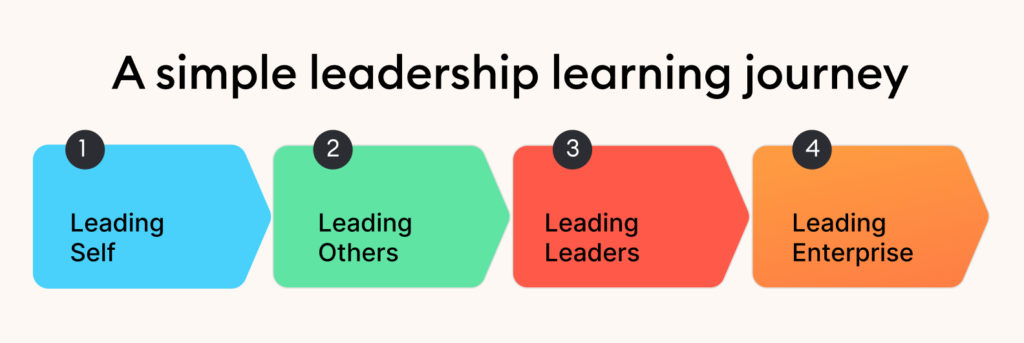
Once you know the gaps, decide how participants will work on them.
Match the format to the skill. Self-paced courses work well for introducing frameworks and common approaches that everyone needs to know. Workshops give participants room to discuss ambiguous situations and learn from their peers. Role-plays and branching scenarios are useful when there is no single perfect response.
Give participants time between learning activities to practice new skills in their actual work. Give participants assignments that use situations that are already on their calendars: hold a development conversation, delegate a meaningful task, ask an employee for feedback, or change the way they run a team meeting. There is no need to invent an artificial exercise when participants can practice with situations they will encounter in their actual work.
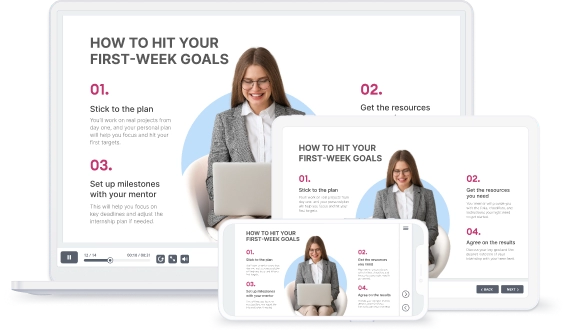
An LMS can keep the structured part of the program in one place. L&D teams can assign courses by role or cohort, combine them into learning paths, set deadlines, and track progress without manually managing each stage. If the program serves managers in different offices or time zones, online learning also gives everyone access to the same core material, while live sessions can be reserved for discussion and practice.
5. Add coaching and mentoring
Mentors bring experience from within the organization or the profession and can talk participants through situations they have encountered themselves. For a new manager, that might mean discussing how to establish authority with former peers. A leader preparing for a senior role may benefit more from someone who has already managed across departments or worked with executives.
Coaching can focus more closely on current behavior and on-the-job experiences. A manager might bring a difficult conversation or recent decision to a session and work through what to try next. Executive coaching can provide similar individual support for senior leaders, while group coaching gives managers a chance to work through shared challenges together. It can also support team building when several leaders need to improve how they work across teams.
If you introduce mentoring, don’t leave the relationship to chance. Match people with enough common ground to make the conversations useful, establish what the mentoring period is for, and give both sides a few prompts or topics to start with. They don’t need a script, but “meet once a month and talk about leadership” rarely gives either participant much direction.
6. Get managers and senior leaders involved
A participant can complete every assignment in leadership training for managers and still have little opportunity to change how they work. Their manager may continue making decisions for them, urgent tasks may repeatedly take priority over training, or there may simply be no time to practice a new skill.
Senior leaders play an important role. Their involvement connects the program to the expectations people encounter elsewhere in the company. They can contribute real business problems for participants to work on, join selected discussions, share examples from their own management experience, or review projects at the end of the program.
L&D still owns the program, but it cannot create the conditions around every participant. Managers and senior leaders control much of what happens once someone completes the course and returns to their role.
Best practices for leadership development
Leadership training is easier to complete than it is to apply. Managers can understand a model perfectly in a course and still struggle with the employee conversation waiting for them afterward. The program needs to connect the two. Here are some proven ways to get the most out of your corporate leadership development program:
- Personalize learning without building a separate program for everyone. Two managers can sit through the same session and need entirely different things from it. Keep the parts that every leader needs in common, then use the initial assessment to decide where each participant needs more attention.
- Build practice around real work. Leadership skills training becomes easier to remember when participants use it soon after learning it. If a module covers difficult conversations, ask managers to identify a conversation they have been postponing and prepare for it.
- Collect feedback while the program is still running. Don’t wait for the final survey to discover that a module arrived too late or that participants can’t apply it to their jobs. Short pulse surveys, conversations with participants and their managers, assessment results, and activity data can show where the program needs adjustment.
Common challenges in leadership development programs
Even a strong curriculum can run into practical problems once the program begins. Many of these are easier to address when they are anticipated during the design phase.
Here are the three most common leadership challenges L&Ds face:
- Participants don’t have time for training. Work rarely becomes quieter because a manager joined a leadership program. Their regular responsibilities continue, which makes an overloaded training schedule difficult to sustain. Use self-paced learning for material that participants can cover independently and keep live sessions for work that benefits from interaction.
- The budget is limited. A leadership development program doesn’t need an external coach, an off-site workshop, and custom content for every participant. Decide where individual attention will have the greatest value. Reusable content matters as well. A workshop delivered to 15 managers has to be delivered again for the next 15. A core eLearning module can serve successive cohorts, with live time used where interaction makes a difference.
- It’s difficult to tell whether the program worked. Completion rates and test scores show whether managers finished the training, not if their behavior changed. Decide what improvement should look like before the program starts. Then check for it through follow-up assessments, manager or employee feedback, performance data, and relevant talent metrics.
How to measure leadership development success
Measure the program at several levels. LMS data can show participation, completion, and assessment results. Follow-up surveys, 360-degree feedback, and manager observations can show whether participants use their new skills at work.
For longer-term business outcomes, return to the business goals you established at the beginning. Depending on the program, useful KPIs might include:
- Internal promotion rates
- Manager and employee retention rates
- Employee engagement scores
- Progress toward leadership development goals
- Readiness of leadership candidates for critical roles
ROI is easiest to assess when the original problem has a measurable cost. Compare the program investment with changes in relevant outcomes, such as lower turnover or reduced spending on external hires.
Example of a leadership development initiative
A leadership development journey doesn’t need to rely on a single training format. The mix depends on who is learning and what they need to practice.
The same blended approach already works in corporate training. PSI, a global clinical research organization, replaced eight instructor-led induction sessions with interactive tutorials, giving employees more flexibility and reducing the time required from subject matter experts. Other companies combine digital learning with instructor-led sessions and scenario-based practice, including training for managers and HR teams.
Formal training provides shared leadership knowledge, while coaching, mentoring, and workplace assignments help participants apply those concepts in real situations.
Tools for leadership development
Technology can take much of the routine administration out of a leadership development program. An LMS can organize training into learning paths, assign different content by role, automate enrollments and reminders, and give L&D teams a clear view of progress and results.
With iSpring LMS, for example, you can build separate learning tracks for emerging leaders, new managers, and experienced leaders, then automate assignments and track each group through reports. Development Plans help structure individual growth around specific competencies and activities, while the Supervisor Dashboard gives managers visibility into their teams’ learning progress.
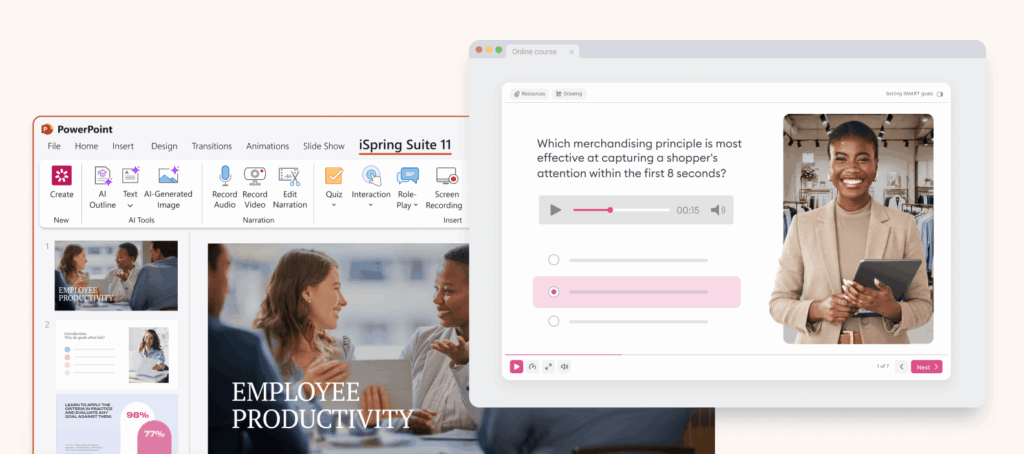
For content creation, iSpring Suite lets L&D teams build courses, quizzes, role-plays, and branching scenarios for situations, such as giving feedback or handling a difficult conversation. Its AI features can also speed up course and assessment creation.
The tools handle the structure; the leadership development plan still starts with the skills that people need on the job.
Conclusion
The most impactful leadership development programs stay close to the job. Managers learn a skill, use it with their teams, receive feedback, and return with a better idea of what they still need to work on.
If you’re learning how to create a leadership development program, begin there. With iSpring Suite and iSpring LMS, you can create the training program, deliver it across different leadership groups, and follow participants’ progress through one connected workflow.
FAQ
How long should a leadership development program last?
There’s no standard duration. Set the timeline around what participants need to learn and how much time they need to practice it on the job.
What are the key components of a leadership development program?
Most programs include clear leadership competencies, participant assessment, structured training, development opportunities to practice at work, feedback, and measurement. Coaching and mentoring can be added when participants need more individual support.
How can leadership development success be measured?
Use a combination of learning, behavior, and business metrics. Completion and assessment results show what happened during training; follow-up feedback and performance data help determine whether managers changed how they work.
Create online courses and assessments in record time.



14 Proven Training Methods for Boosting Staff Performance

Soft Skills Training in the Workplace: It’s Time to Soften Up