11 Litmos Alternatives to Consider in 2026
 15 minutes




Litmos or SAP Litmos is a widely used and well-respected learning platform for mid-sized and larger companies. However, the eLearning industry itself is constantly evolving. Many other LMS providers are emerging with innovative features, integrations, and pricing models that sometimes outmatch Litmos in flexibility and user experience.
 In this article, we’ll explore why some companies are choosing to move away from Litmos, what to consider when evaluating replacements, and which platforms stand out as the best Litmos alternatives in 2026.
TL;DR
The article explains why some organizations are moving away from Litmos — citing issues with integration, pricing, limited analytics, dated UI, and basic authoring — and suggests what to look for in a replacement. It then highlights several noteworthy alternatives, including iSpring LMS, Docebo, Absorb LMS, TalentLMS, 360Learning, LearnUpon, Moodle (an open-source platform), Cornerstone Learn, Tovuti LMS, EducateMe, and Seismic Learning, describing their strengths, features, and ideal use cases to help buyers compare options and choose an LMS that better matches their evolving training needs.
Why Consider Litmos Alternatives?
For years, Litmos LMS has been a go-to solution in the corporate learning world, particularly for mid-sized and enterprise organizations. But as business needs evolve, some Litmos clients find that the platform no longer fully supports their goals.
Common reasons for this include integration challenges, complex or costly pricing, and cumbersome administration.
Moreover, many competing LMS platforms now offer stronger engagement tools, richer gamification, and AI-driven features. So, if any of these challenges sound familiar, it might be time to explore other options.
But how do you know if it’s time to make the move? Here are some common signs that exploring Litmos alternatives is worth your time:
You need smoother integrations
Connecting Litmos with other tools in your organization, such as your HRIS, CRM, or analytics platforms, often requires extra configuration and support.
UI and engagement features fall short
According to many users, the Litmos interface is starting to lag behind competitors. A dated design can slow down learners and drag down the overall experience.
You expect more responsive customer support
Customer support is a recurring pain point mentioned in Litmos reviews. If your team lacks technical specialists, this can quickly become a major issue. Some alternatives stand out for their responsiveness and reliability. iSpring LMS, for example, is known for providing 24/7 expert support whenever you need it.
Pricing doesn’t seem cost-effective
Litmos is often seen as one of the pricier options on the market. Its per-user pricing model can also make it less practical for smaller businesses or those that are scaling quickly. If costs are becoming a concern, you’ll find more budget-friendly platforms that still deliver a seamless corporate learning experience.
Reporting and analytics could be more granular
While Litmos does include reporting and analytics, users often find them too limited — especially those at the enterprise level who depend on data for decision-making.
You want better built-in authoring tools
Litmos offers basic content creation capabilities, but if you develop many custom courses, you’ll probably want something more powerful.
What to Look for in a Litmos Alternative
If you’ve decided to look at Litmos alternatives, it’s important to be clear about what to evaluate so you can make the best choice. This will mainly depend on two things: the issues you’re currently facing with Litmos (like the ones above) and your organization’s current priorities.
This is what your list might look like:
| Current frustration | Desired change |
|---|---|
| Difficult system maintenance and support | Lighter, easier to maintain system |
| Insufficient authoring features | Advanced native authoring tool |
| Unreliable customer support | Always-on customer service from vendor |
| Etc. | Etc. |
You might, for example, be looking for a more powerful authoring tool, deeper reporting capabilities, or a simpler pricing model. Whatever your priorities are, it’s important to define them clearly before you start exploring specific platforms.
Don’t know where to start? Get a free LMS buyer’s guide with practical checklists and resources to help you choose the right LMS for your corporate training needs.
Now, let’s take a closer look at some of the top Litmos alternatives currently available on the market.
Top Litmos Alternatives in 2026: Key Features, Pricing, and More
Here, you’ll find brief overviews of the top 11 Litmos competitors. These platforms were carefully selected from a crowded market to help you compare options and make a confident, well-informed choice.
1. iSpring LMS
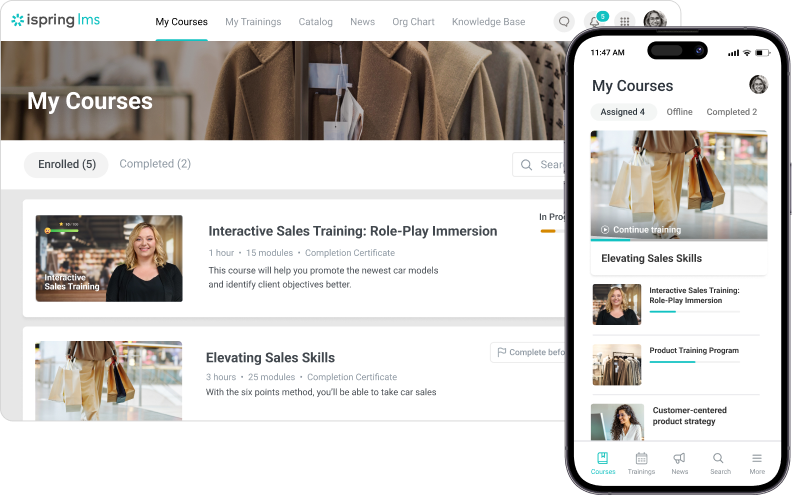
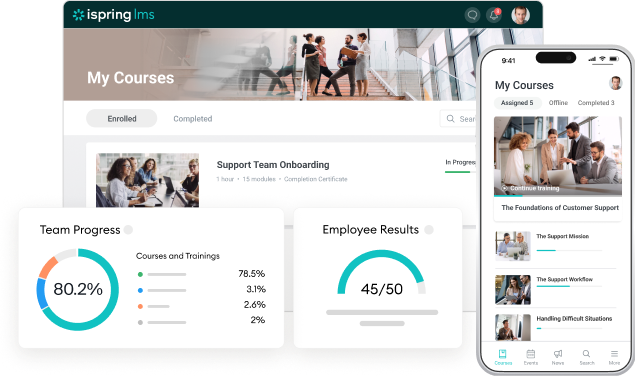
iSpring LMS is an award-winning learning platform that helps L&D and HR teams manage the entire training cycle — from structured onboarding to ongoing employee development, without extra admin burden or IT help. It centralizes training content, automates enrollments and reminders, and mirrors actual org structures so you can manage teams, roles, and locations in one place.
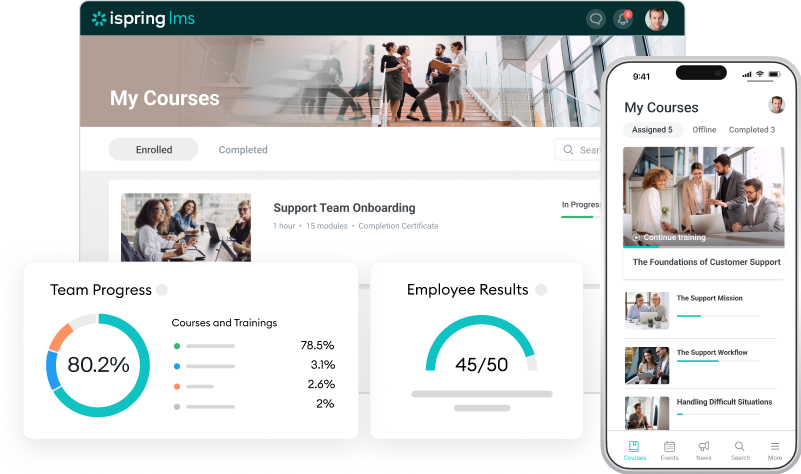
Development plans, OJT checklists, 360-degree feedback, and the built-in knowledge base turn training into a continuous, measurable process instead of separate, unconnected activities. With clear dashboards, detailed analytics, and mobile/offline access, iSpring LMS gives managers the visibility they need while offering learners a clean, modern experience that actually motivates them to complete training.
The platform also combines a user-friendly learning experience with powerful AI-assisted course authoring for high course effectiveness.
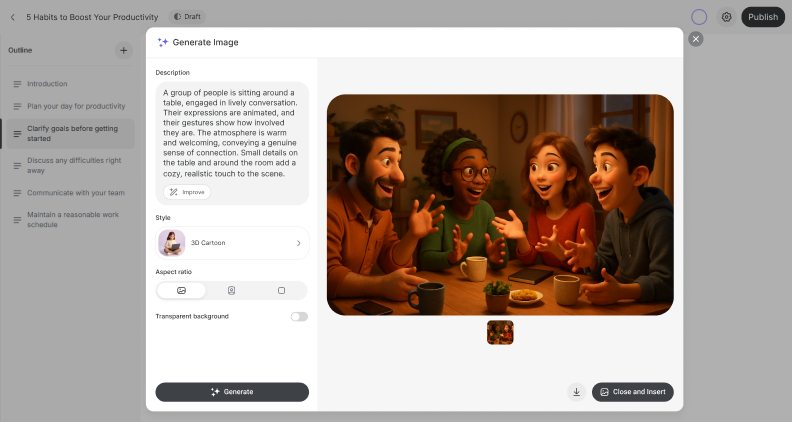
Paired with iSpring Suite, iSpring LMS lets you quickly turn PowerPoint presentations into polished, SCORM-ready training courses with no need for technical expertise, so you can launch impactful learning programs faster.
Best for
Midsize and enterprise organizations that need deeper analytics, smoother integrations, and easier admin workflows than legacy LMSs can provide, while keeping onboarding, compliance, and ongoing development structured, scalable, and ROI-efficient.
Pricing
Starting from $3.58 USD per user/month.
2. Docebo
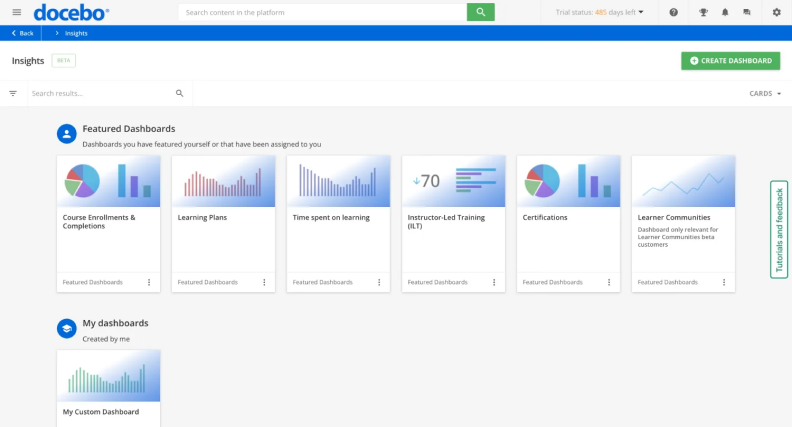
Docebo is an enterprise-level LMS offering a wide range of features and advanced automation for complex learning ecosystems. It supports custom learning paths, deep analytics, mobile learning, and scaling for multiple users across global teams. The platform is best known for its rich AI-driven tools, advanced personalization, and engagement features.
The LMS excels in advanced reporting, detailed monitoring of learner progress, and integration with HR, CRM, or partner systems. Drawbacks include complex implementation, higher pricing, a steeper learning curve, and a feature set that can be overwhelming for smaller teams. Also, Docebo cannot export complete learning modules in either SCORM or other standard eLearning formats. Some reviews mention that customer support is not always readily available.
Best for
Large enterprises or mature L&D teams looking for a highly scalable, customizable LMS with extensive analytics and advanced learning management features.
Pricing
Upon request.
3. Absorb LMS
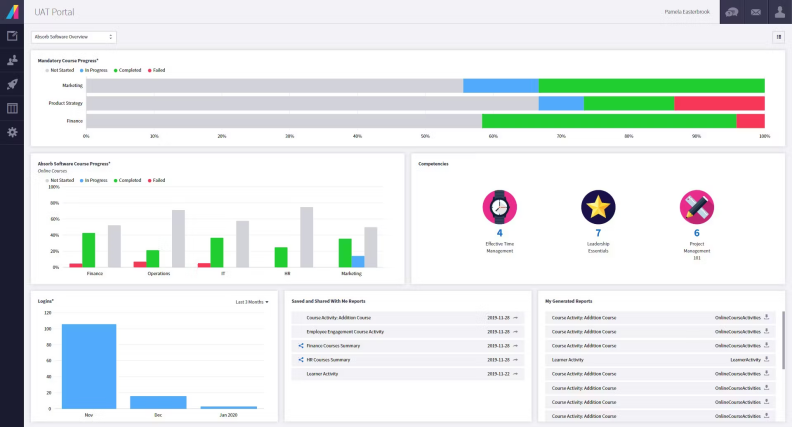
Absorb LMS strikes a balance between usability and power, appealing to organizations in need of a strong platform without a heavy administrative load. The platform has a user-friendly interface and allows admins to easily monitor learner progress, track course completion, and deliver all types of online courses and instructor-led training. Interactive features and mobile app access ensure an engaging learning experience for various audiences.
Absorb’s strengths include comprehensive reports, an intuitive user experience, and reliable integrations. Still, limitations might show up in highly complex enterprise scenarios or when working with very large user bases.
Best for
Organizations looking for a versatile learning management system that scales moderately while providing a smooth learner experience.
Pricing
Upon request.
4. TalentLMS
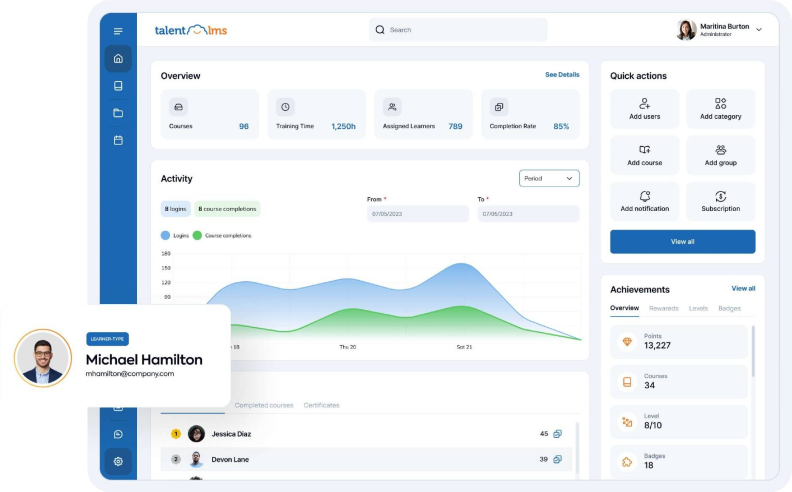
TalentLMS is an easy-to-launch, user-friendly platform that’s most popular with smaller and midsize organizations. Its intuitive user interface and a fairly straightforward deployment process allow teams to deliver training materials quickly, track learner progress, and manage their eLearning programs efficiently.
Despite being lightweight, the system covers essentials like course management, assessments, some gamification, and common integrations. However, larger companies might find it lacking in advanced features, such as extensive customization, deep reporting, and automation. The built-in course authoring tool, although easy to use, has limited capabilities compared to the more elaborate authoring features that other Litmos competitors offer. Learning content export is also unavailable in this LMS.
Best for
Companies looking for quick deployment, simplicity, and affordability, while providing engaging learning experiences.
Pricing
From USD $119/month.
5. 360Learning
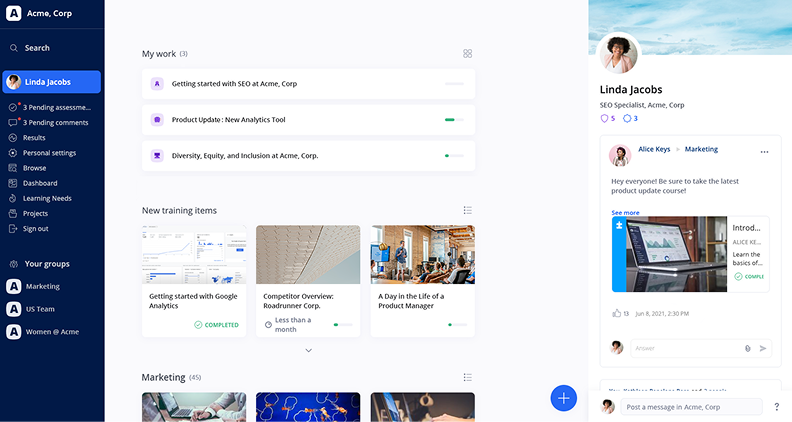
360Learning is a learning experience platform focused on collaborative and social learning, enabling subject-matter experts to co-create training materials and deliver interactive courses. The platform encourages enhanced engagement through discussion threads, user feedback, and collaborative content creation.
Some limitations are less advanced reporting and fewer compliance features compared to traditional LMSs. Automation is also not its biggest strength, which may not suit larger organizations that prioritize structure and effectiveness above all else. The system also doesn’t allow you to export learning modules, and ready-made courses are only available from third-party providers.
Best for
Organizations that emphasize collaborative learning, knowledge sharing, and rapid content updates to maintain an engaging learning experience.
Pricing
From USD $8 per registered user/month.
6. LearnUpon
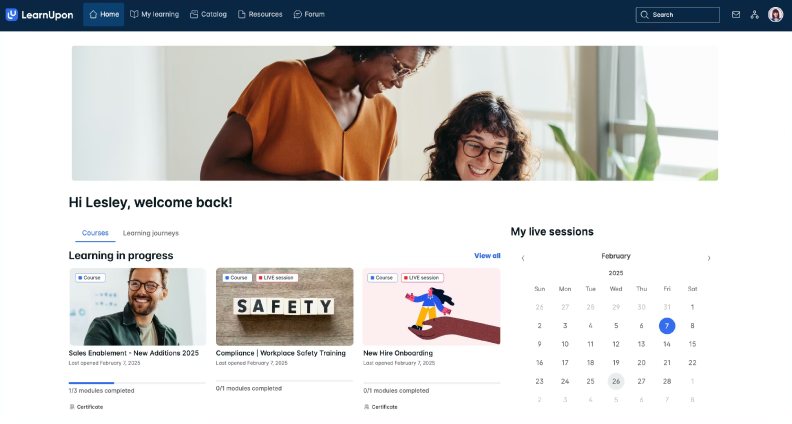
LearnUpon is a scalable, user-friendly LMS that allows management of multiple audiences, including employees, customers, and partners, from a single platform. The system is generally reliable and a decent fit for corporate training, since it supports certifications, detailed reporting, modern content formats, and integration with the most commonly used business systems.
The system works for a variety of audiences, offering employee, customer, and partner training, and more, and its personalization and AI features make it a strong player among competitors. Some limitations are course authoring tools that are too basic, limited social learning capabilities, the absence of a ready-made course library, and no course export options.
Best for
Large and fast-growing companies that need to deliver training to multiple groups of learners efficiently from a centralized learning hub.
Pricing
Upon request.
7. Moodle (Open-Source)
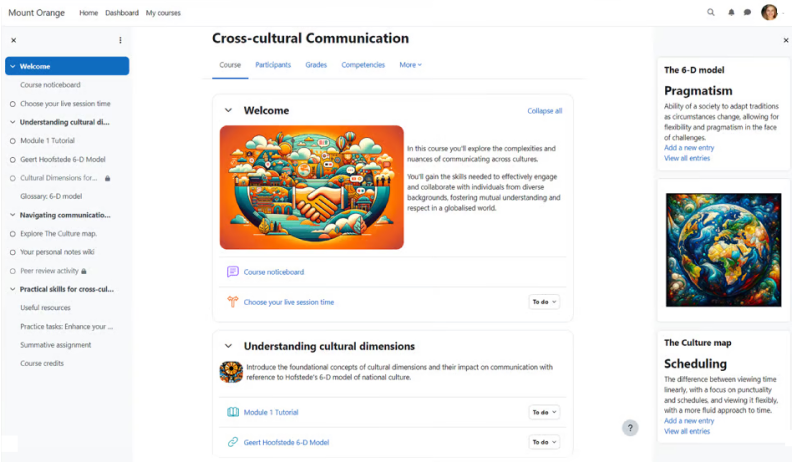
Moodle is a highly flexible, open-source learning management system widely used by educational institutions and corporate teams alike. It offers robust course creation, extensive customization, a variety of interactive tools, and strong social learning features. The system allows admins to efficiently track learner progress, conduct assessments, and enhance learning experiences through a vast library of plug-ins and integrations.
Moodle’s core strengths include full control, scalability, flexibility, and remarkable cost-effectiveness. However, the initial setup and ongoing maintenance require technical expertise, and support is only available for the paid Workspace version, which is not one of the most affordable systems out there.
Best for
Companies that prioritize customization, control, and the ability to manage their own hosting.
Pricing
Free (open-source version).
8. Cornerstone Learn
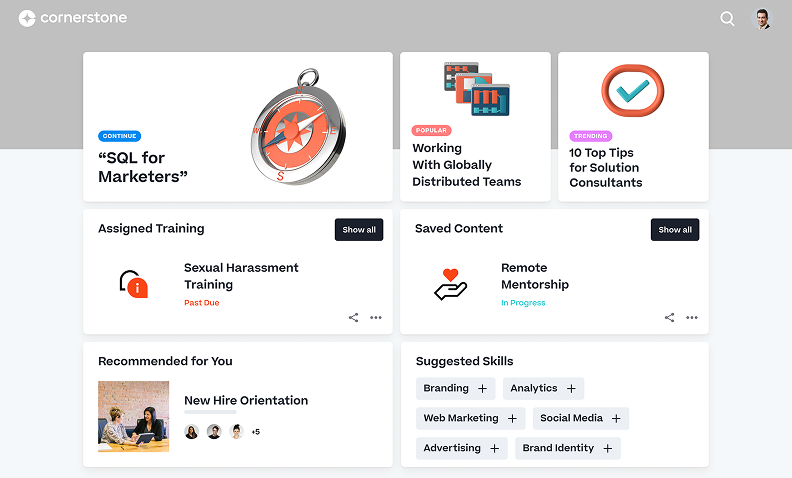
Cornerstone Learn is a large-scale enterprise LMS that integrates learning, talent development, and compliance training into a single platform. It offers custom learning paths, advanced reporting, and AI-driven skill mapping to identify skill gaps and create personalized learning strategies for employees in a variety of industries.
The platform’s highlights include a vast library of off-the-shelf learning content, advanced analytics features, AI-powered recommendations, and exportation of learning modules. On the downside, the platform’s overall complexity and non-intuitive implementation process can be challenging for smaller organizations. Some users also report issues with the user interface and data accuracy in reports.
Best for
Enterprise-level organizations seeking a comprehensive, scalable LMS with advanced capabilities for learning, talent, and workforce development.
Pricing
Upon request.
9. Tovuti LMS
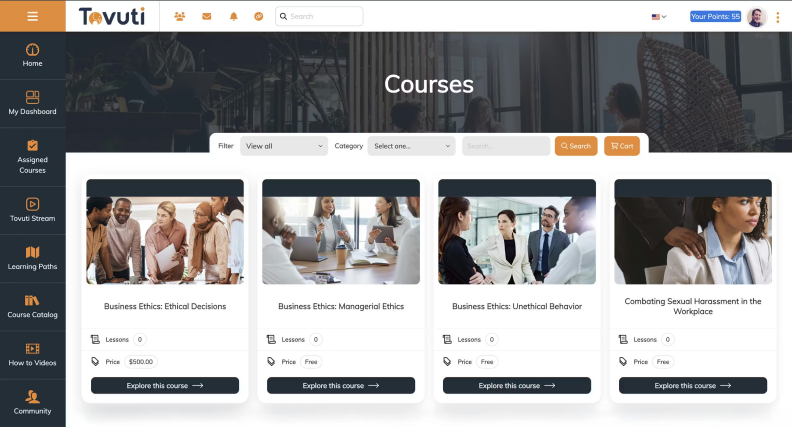
Tovuti LMS is an all-in-one platform that streamlines course creation, training delivery, and learner engagement. It is focused on interactivity, engagement, and mobile access and offers robust course creation tools, allowing teams to build quality online courses quickly. Personalized learning paths and pre-built content enhance learning experiences, while analytics features are sufficient to reliably track learner performance and course completion.
Simplicity, a clean interface, and its feature set make it a good option for smaller and midsize organizations. However, large enterprises may require more power and additional integrations.Users often cite navigation difficulties, customer support issues, and limited customization as some of the system’s drawbacks.
Best for
Midsize organizations and SMBs looking for an easy-to-manage LMS that combines structured course creation, efficient course delivery, and tools that foster learner engagement in a single platform.
Pricing
Upon request.
10. EducateMe
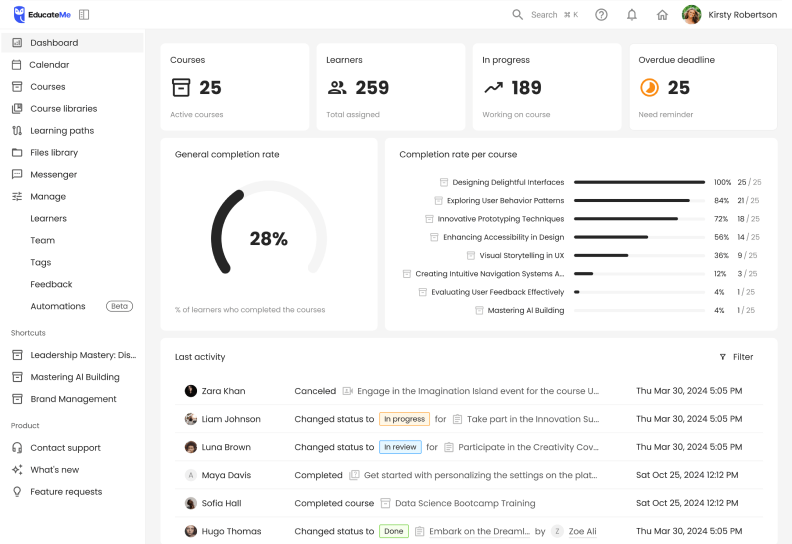
EducateMe is a cohort-based LMS designed for collaborative and community-driven learning. It supports AI-assisted content creation, AI role-plays, custom branding, engaging video-based learning, and automated feedback workflows. Teams can monitor learner progress, track course completion rates, and manage learner tasks with ease.
The platform’s strengths lie in strong collaboration features, reduction of administrative tasks, and support of cohort-based programs. The standout feature is an AI role-play coach that allows the learner to practice various learning scenarios in a risk-free learning environment. Some limitations are less extensive reporting and fewer integrations when compared with enterprise LMSs.
Best for
Training teams, corporate academies, and bootcamps that prioritize learner engagement, collaboration, and social interaction.
Pricing
From USD $72 per month.
11. Seismic Learning
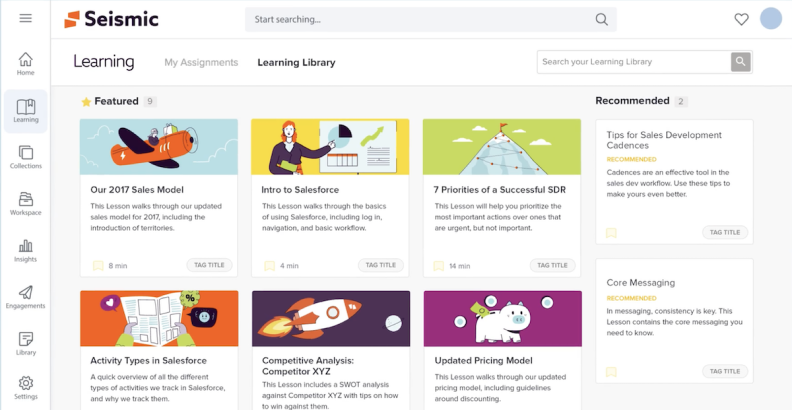
Seismic Learning is a specialized alternative focused on sales and partner enablement. The system offers personalized coaching plans, AI-powered feedback and assessments, interactive content, and robust analytics tools. A remarkably intuitive interface and exceptional user-friendliness are the most praised features of this platform, making it easy and convenient to use.
Other strengths include deep integration with CRM and business systems, strong reporting, and tools to boost user engagement and training effectiveness. It also offers ready-made content libraries, customizable course materials, and support for instructor-led training. The main limitation is the tool’s narrow focus: it’s primarily made for sales, partner programs, and role-specific enablement, rather than broader employee training.
Best for
Sales teams, partner training programs, and organizations that need targeted, on-the-job learning tied closely to business workflows.
Pricing
Upon request.
Top Litmos Alternatives: Comparison Table
| Platform | What makes it stand out | Pricing | Best for | Drawbacks | Why choose it over Litmos |
|---|---|---|---|---|---|
| iSpring LMS | Ease of use + great built-in authoring | From USD $3.58 per user/month | Teams needing a powerful, scalable LMS that’s easy to set up and use | Lighter automation compared to more enterprise-focused competitors | More modern UI, easier setup, stronger native authoring tool |
| Docebo | AI-powered learning and enterprise scalability | Upon request | Midsize to enterprise organizations | Higher cost; steep learning curve | More powerful automation, a broader ecosystem, enterprise-level scalability |
| Absorb LMS | Clean UI, strong automation, solid analytics | Upon request | Compliance-heavy industries | Add-ons can increase cost; basic authoring | Stronger reporting and automation; smoother user experience |
| 360Learning | Collaborative, peer-driven learning | From USD $8 per registered user/month | Teams that want employees to cocreate training | Not ideal for strict compliance | Better for social learning and knowledge sharing |
| LearnUpon | Multi-portal training for customers, partners, and employees | Upon request | Training multiple external audiences | Limited built-in authoring | Superior multi-portal structure; better suited for external training |
| Tovuti LMS | Highly engaging learning with gamification | Upon request | Blended and interactive learning | Navigation difficulties | More engaging content formats and richer interactivity |
| Moodle (Open-Source) | Full customization and plug-in ecosystem | Free (open-source version only) | Organizations needing maximum flexibility | Requires technical expertise | Full control and customization |
| Cornerstone Learn | Complete talent and learning ecosystem | Upon request | Large enterprises | Complexity and non-intuitive implementation; higher pricing | Broader HR and learning suite and advanced enterprise capabilities |
| EducateMe | Modern cohort and community-based learning | From USD $72 per month | Academies, bootcamps, cohort-based programs | Newer platform; fewer integrations | Better for live learning, groups, and community-building |
| Seismic Learning | A specialized alternative for sales and partner enablement | Upon request | Sales teams, partner programs, and organizations needing targeted, on-the-job learning | Narrower focus; less suited for broad employee training | Laser-targeted solution for specialized teams |
How to Pick the Right Litmos Alternative
Selecting the right Litmos alternative mainly comes down to what your business needs most. Before making your choice, think back to the selection criteria we covered earlier and use them as your compass.
Also, here’s a quick guide to help you narrow down your choices:
- If you want fast setup and low admin work, look for platforms with simple interfaces and quick deployment. These work well when you need to launch training fast.
- If built-in authoring is important, choose platforms with strong native course creation tools that support interactive content and standard formats.
- If you need deep customization, choose systems that let you tailor workflows, learning paths, and the overall learner experience.
- If compliance or detailed reporting is essential, prioritize tools with advanced tracking, automated certification workflows, and strong analytics.
- If collaborative learning matters, consider platforms that support shared content creation and social or peer-driven learning features.
- If you run cohort-based or community-focused programs, pick systems built for live sessions, group work, and integrated communication.
- If you’re planning a global rollout, look for multilingual support, multi-portal options, and tools that handle complex organizational structures.
Regardless of other requirements, companies of all sizes usually benefit from tools that are easy to set up, use, and support.
Solutions like iSpring LMS are ideal here: it’s simple to set up, easy for admins to manage, and provides strong built-in authoring. To learn more about how iSpring LMS can improve training at your company, book a live demo of the platform.
Conclusion
If you’ve decided to switch from Litmos, the smartest approach is to define your must-have features, shortlist a few options, and test them in real-life scenarios. Run trials and request demos to see how each platform performs in organizations like yours. With a bit of hands-on comparison, you’ll quickly see which LMS aligns best with your long-term needs.
Ready to test one of the strongest Litmos competitors? Download a free trial version of iSpring LMS to see if it works for you.
for your mission-critical project


The Best 7 D2L Brightspace Alternatives in 2026

The Top 3 TalentLMS Alternatives to Switch to in 2026
