iSpring helps me blend emotional and artificial intelligence in eLearning
 6 minutes

With over ten years of experience in L&D, Diana Păun has built a reputation for transforming complex, highly technical topics into clear, engaging, and human-centered learning experiences.
In recognition of her expertise, Diana won the 2025 iSpring Course Creation Contest (Winter Edition) and became a mentor in the iSpring Learning Exchange community, where she guides fellow instructional designers in refining their craft.
Background

Diana Păun
Diana spent almost a decade at BRD – Groupe Société Générale, where she designed large-scale blended learning programs, launched the organization’s first mobile learning initiative, and introduced gamification and video learning across multiple departments.
In 2023, she joined DiXiO, a fintech company based in Dubai, where she created the DiXiO Academy – a digital learning hub combining technical and soft-skills training.
By 2025, Diana’s passion led her to establish “Diana Păun — Digital Learning Solutions,” a consultancy that helps global clients bring learning ideas to life through thoughtful instructional design and eLearning development.
In this interview, Diana shares her perspective on learning design, the balance between emotional and artificial intelligence, and how iSpring tools support her day-to-day work.
What is the biggest challenge you face as an instructional designer?
In most of my projects, the biggest challenge — and the most rewarding part — is transforming complex, abstract, or highly technical subjects into clear and engaging learning experiences.
To do this, I try to understand the topic, the learners, and the business context, and blend them into something that feels simple, relevant, and valuable.
Finding this balance between depth and clarity is the art of instructional design.
How do you generate learner buy-in when launching new programs?
I don’t start with objectives or theory. I start with people — their needs, challenges, and daily reality.
Short teasers, relatable stories, or practical exercises help them connect with the content and see that it’s worth investing their time. When learners recognize themselves in the story, buy-in happens naturally. Learning feels less like something imposed and more like something that matters to them.
How do you keep learning programs fresh and engaging over time?
I stay attentive to new features and updates in the tools I use, such as iSpring, Vyond, Canva, and AI platforms.
Whenever something new appears, I test it in live projects with different clients.
This variety allows me to explore, adapt, and integrate new possibilities that improve both efficiency and learner experience. Freelancing gives me the autonomy to innovate continuously and keep my deliverables fresh and current.
What would you tell your younger self about instructional design?
I’d tell her to learn how to dance between the high-level view and the detailed view of every project:
At first, you invest energy into the big picture — to understand direction. Then you dive into the details to bring it to life. But when you live too much in the details, it’s easy to lose sight of the purpose.
Being able to move between these two lenses consciously is one of the most important skills in this field. It keeps projects coherent and meaningful.
What might surprise people about your day-to-day work?
Many assume that instructional design is all about authoring tools, but most of the work happens before creation even begins. It’s research, analysis, content mapping, and understanding how people think and learn.
At the same time, it’s deeply creative.
You can’t schedule creativity — it comes when the mind has space. Instructional design is a mix of structure and art, logic and imagination. That balance is what makes it fascinating for me to experience.
How do you overcome obstacles in learning program development?
Obstacles usually appear when there’s a disconnect between details and the bigger picture. To overcome them, I combine empathy and communication with reflection.
I make sure I understand the actual need of the project — sometimes even the client discovers it along the way. Staying open, asking questions, exchanging feedback, and co-creating solutions help align perspectives and move forward efficiently.
Every experience is an opportunity to learn and grow together.
How are you using AI in your learning design process?
As with the internet or smartphones when they first appeared, AI is becoming an extension of ourselves. It doesn’t replace us — it supports us.
I use it for time-consuming tasks like mapping content, structuring information, generating first drafts, and creating quick prototypes. AI can also become part of the learning experience itself through agents or chat interactions.
The key is to blend emotional intelligence and artificial intelligence to create learning experiences that are both efficient and deeply human.
What has been your biggest success so far?
Seeing learners genuinely engaged and self-driven. In several implementations, I’ve observed participation and completion metrics rise. But even more importantly, I’ve seen people requesting more training projects.
That’s when learning stops feeling like a requirement and becomes a resource employees turn to voluntarily. That’s when you know you’ve built something that truly connects.
How has using iSpring benefited your work?
I work as a freelancer and design learning programs for different clients.
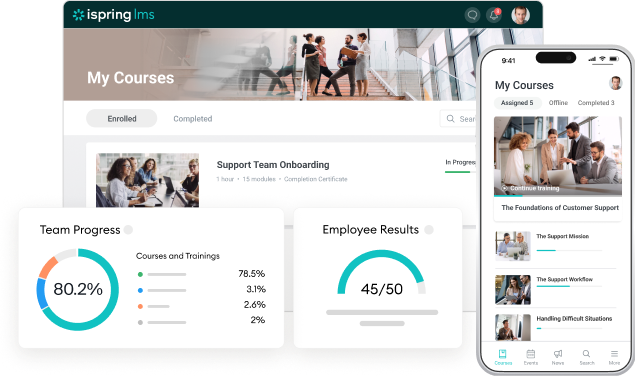
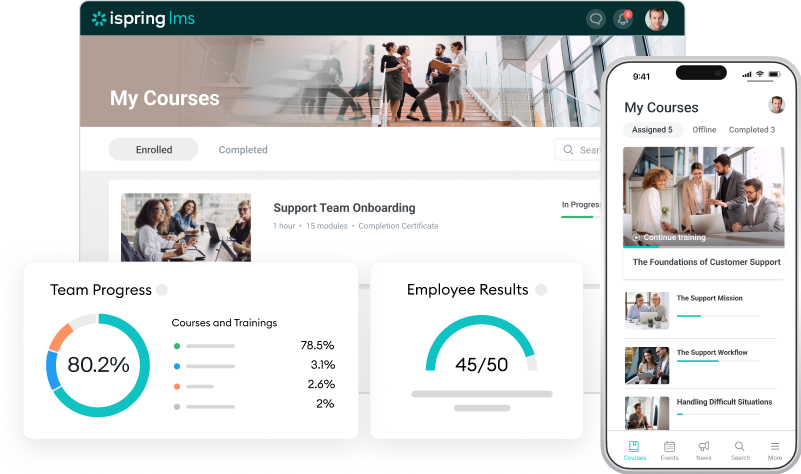
I see that iSpring LMS goes beyond being just an LMS — it’s a true Learning Experience Platform.
It supports end-to-end learning: from blended learning tracks that combine courses, assignments, and discussions, to community learning, gamification, and competency-based development plans. It’s a complete ecosystem for growth.
With iSpring Suite AI, I can design faster, add interactive elements, and deliver professional-quality courses that reflect each client’s unique context — without adding complexity to my workflow.
How do you stay productive and avoid burnout?
Planning is my best defense against burnout. I use Gantt charts to organize my work and Microsoft Planner to schedule and prioritize tasks. Putting everything in order clears my mind and allows creativity to flow freely.
Once things are mapped out, ideas come naturally. I use a diverse set of tools for structure and inspiration. The right mix keeps both productivity and energy in balance.
Final Thoughts
Winning the iSpring Course Creation Contest earlier in 2025 and becoming a mentor in the iSpring Learning Exchange have been major milestones for Diana.
We at iSpring are pleased that our tools served to enhance her success, and we believe that Diana’s story reflects the power of thoughtful and meaningful learning design.
If you face similar challenges, book a free consultation with an iSpring eLearning specialist to see how iSpring Suite AI and iSpring LMS can help you create learning experiences that truly connect.
for your mission-critical project